
Wishbone Offense Playbook: A Comprehensive Guide
Discover a detailed resource for coaches seeking to implement the wishbone, including blocking schemes, formations, and option fundamentals—available as a downloadable PDF.
Historical Context of the Wishbone
The Wishbone’s roots trace back to the split-T formation, evolving through the innovative minds of coaches like Emory Bellard at the University of Texas in the late 1960s. This offensive scheme quickly gained prominence due to its deceptive triple-option attack, overwhelming opponents with a potent rushing game.
Early success at Texas, with national championships in 1969 and 1970, cemented the Wishbone’s place in football history. The offense’s effectiveness stemmed from its ability to exploit defensive weaknesses and control the clock.

PDF playbooks from this era, and modern adaptations, demonstrate the enduring principles of this ground-focused attack. While its prevalence in higher levels of football has waned, the Wishbone remains a valuable teaching tool, particularly at the youth level, for fundamental blocking and option execution.
Key Principles of the Wishbone Offense
The Wishbone centers around deception and consistently gaining positive yardage through the triple option. A PDF playbook will emphasize the core tenets: precise blocking assignments – down, reach, and double-team – creating running lanes for the quarterback, fullback, and halfback.
Option execution is paramount, demanding disciplined reads and quick decision-making from the quarterback. The fullback’s role is crucial in initial blocking and becoming a potential option receiver.
Control of the clock and minimizing turnovers are vital. A well-executed Wishbone offense aims to wear down the defense and dictate the game’s tempo. PDF resources often detail these principles, offering coaches a blueprint for building a successful ground attack.
Personnel Groupings in the Wishbone
A comprehensive PDF playbook will detail various personnel packages within the Wishbone. The standard grouping features a quarterback, fullback, and two halfbacks aligned in a distinct wishbone shape. Variations include utilizing a slot formation, shifting a halfback closer to the tackle for quicker option reads.
Trips formations, with three receivers to one side, introduce passing opportunities and create unbalanced defensive matchups. PDF resources often illustrate these groupings, outlining adjustments to blocking schemes and option routes.
Coaches must adapt personnel based on player strengths. A mobile quarterback is essential, while backs need speed and blocking ability. The playbook should provide guidance on tailoring formations to maximize team capabilities.
Core Blocking Schemes
A detailed PDF playbook is crucial for mastering Wishbone blocking. Down blocking, a fundamental technique, involves offensive linemen driving defenders directly downward, creating running lanes. Reach blocking requires linemen to quickly move laterally, sealing off defenders at the point of attack.
Double-team blocking, often used on defensive tackles, combines the strength of two linemen to create a powerful push. PDF resources will illustrate these schemes with diagrams and coaching points.
Effective blocking is the foundation of the Wishbone. The playbook should emphasize proper footwork, hand placement, and communication between linemen to consistently win at the line of scrimmage.
Down Blocking Techniques
A comprehensive PDF playbook details down blocking as a core Wishbone technique. Linemen aim to drive defenders straight down, creating a vertical push and sealing the inside gap. Proper footwork is paramount – a quick first step and maintaining a low center of gravity are essential.
Hand placement should be inside the defender’s frame, controlling their movement. The playbook will illustrate the correct angle of attack and emphasize finishing the block through the whistle. Youth football adaptations often simplify this, focusing on effort and direction.
Consistent down blocking creates predictable running lanes for the ball carrier.

Reach Blocking Techniques
Wishbone offense playbooks, often available as PDFs, emphasize reach blocking for perimeter runs. Linemen step laterally, aiming to “reach” the defender and cut them off from the play. Successful reach blocks require excellent footwork, agility, and timing. The playbook details the proper angle of approach and the importance of maintaining leverage.
Linemen must consistently gain ground and secure the edge, creating a running lane outside. Youth football versions may focus on simpler reach concepts, prioritizing effort and aiming points. A well-executed reach block can spring the halfback for significant gains.
Double Team Blocking Techniques
Wishbone offense playbooks, frequently found as PDFs, heavily utilize double-team blocks to neutralize strong defensive tackles or create running lanes. These playbooks illustrate how two offensive linemen work in unison, initially engaging the defender with a combined effort. The goal is to drive the defender off the line of scrimmage or create a gap.
The playbook details the responsibilities of each lineman – the initial drive blocker and the finisher. Youth football adaptations simplify this, focusing on basic double-team concepts. Effective double teams are crucial for inside runs and establishing a strong offensive presence.
Wishbone Formations: Variations and Adjustments
Wishbone offense playbooks, often available as PDFs, showcase core formations like the standard Wishbone, Slot, and Trips. These resources detail adjustments for different defensive fronts, emphasizing pre-snap reads and formation shifts. The standard Wishbone features the quarterback under center with two halfbacks and a fullback.
Slot formations introduce a receiver split wide, creating flexibility. Trips formations concentrate receivers to one side, stressing the defense. Playbooks illustrate how to exploit defensive weaknesses through formation adjustments, maximizing the triple option’s effectiveness. Understanding these variations is key to offensive success.
Standard Wishbone Formation
Wishbone offense playbooks in PDF format consistently highlight the standard formation as the base. This setup features the quarterback directly under center, flanked by two halfbacks positioned slightly behind and outside the fullback. The fullback aligns directly behind the quarterback, creating a powerful running attack.
Playbooks detail the alignment of offensive linemen, emphasizing down and reach blocking assignments. This formation prioritizes a strong ground game, utilizing the triple option. PDF resources often include diagrams illustrating proper spacing and receiver positioning. Mastering this base is crucial before exploring variations.
Slot Wishbone Formation

Wishbone offense playbooks in PDF format demonstrate the Slot Wishbone as a variation offering increased passing threats. This formation shifts one halfback into a slot position, closer to the offensive line and typically split wide of a tackle. PDF resources illustrate how this adjustment creates favorable matchups for quick passes and screens.
Playbooks emphasize the slot receiver’s role in option routes and providing an additional blocking presence. The formation maintains the core triple-option principles but adds versatility. Coaches utilize this to exploit defensive weaknesses. Diagrams within the PDF detail adjustments to blocking schemes and quarterback reads.
Trips Wishbone Formation
Wishbone offense playbooks in PDF format often detail the Trips Wishbone, a formation designed to stretch the defense horizontally. This variation aligns three receivers to one side of the field, creating overload opportunities. PDF resources showcase how this impacts linebacker and safety responsibilities, opening running lanes.
Playbooks highlight the use of quick passes and screens to exploit the defensive adjustments to the trips side. The formation demands precise blocking and quarterback reads to capitalize on the defensive imbalance. Coaches leverage this to create favorable matchups. Diagrams within the PDF illustrate route combinations and blocking adjustments.
Triple Option Fundamentals
Wishbone offense playbooks in PDF format emphasize the core of the attack: the triple option. These resources detail the quarterback’s read progression – dive, keep, and pitch – crucial for success. PDFs illustrate proper footwork and decision-making based on defensive reactions.
Playbooks break down fullback responsibilities, focusing on lead blocking and dive reads. They also cover halfback duties, including pitch protection and option routes. Successful execution relies on precise timing and communication. Diagrams within the PDF showcase the option path and key blocking assignments, ensuring a potent ground game.
Quarterback Reads and Decision-Making
Wishbone offense playbooks (PDFs) meticulously detail the quarterback’s primary reads. The first read is typically the defensive end – if he crashes, the QB pulls the ball for a keep. PDFs illustrate recognizing defensive alignment and reacting accordingly.

Playbooks emphasize reading the pitch defender; a hesitant defender signals a pitch to the trailing halfback. These resources highlight the importance of quick, decisive decision-making. Diagrams showcase read steps and proper ball-handling technique. Successful quarterbacks master these reads, maximizing the option’s effectiveness and controlling the clock.
Fullback Responsibilities in the Option
Wishbone offense playbooks (PDFs) clearly define the fullback’s crucial role. The fullback’s initial path is a dive read, forcing the defensive end to commit. PDFs detail proper footwork and aiming points for the dive.
Playbooks emphasize the fullback’s blocking responsibility if the QB keeps the ball, sealing the edge defender. These resources illustrate techniques for delivering a solid block and creating a running lane. Diagrams showcase the fullback’s alignment and timing. Effective fullbacks are physical, decisive, and understand their key role in the option’s success.
Halfback Responsibilities in the Option
Wishbone offense playbooks (PDFs) outline the halfback’s pitch responsibilities. Initially, the halfback takes a wide path, preparing for the pitch from the quarterback. PDFs detail the proper depth and angle of the route.
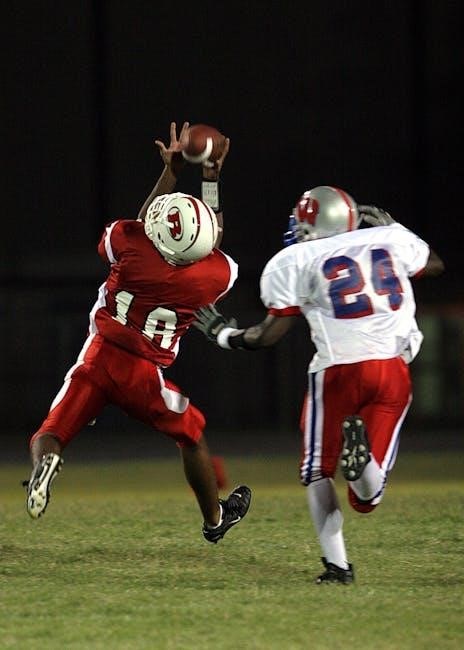
Playbooks emphasize the halfback’s ability to quickly read the defense and adjust the route accordingly. These resources illustrate techniques for receiving the pitch cleanly and accelerating into the open field. Diagrams showcase the halfback’s alignment and timing. Successful halfbacks possess speed, agility, and excellent ball-catching skills.
Passing Game within the Wishbone
Wishbone offense playbooks (PDFs) demonstrate that while ground-focused, the offense incorporates a passing element. PDFs reveal play-action concepts designed to exploit defenses anticipating the run. These resources detail routes that complement the option attack, often utilizing tight ends and halfbacks.
Playbooks showcase screen pass options as effective change-of-pace plays. Diagrams illustrate route combinations and receiver responsibilities. Successful passing relies on deceptive play-action and quick throws. PDFs emphasize timing and accuracy, crucial for maximizing passing efficiency within the wishbone’s framework.
Play-Action Passing Concepts
Wishbone offense playbooks (PDFs) heavily feature play-action, capitalizing on the run threat. PDFs illustrate how faking option plays draws linebackers, creating passing lanes. These resources detail routes designed to exploit vacated areas, often utilizing crossing patterns and deep posts.
Playbooks emphasize selling the run fake – quarterback footwork and handoffs are crucial. Diagrams showcase timing between the quarterback and receivers. Effective play-action requires convincing deception, maximizing the impact of the fake. PDFs provide drills to refine these techniques, enhancing passing success.
Screen Pass Options
Wishbone offense playbooks (PDFs) often include screen passes as a change-of-pace option, countering aggressive defenses. PDFs detail various screen types – running back screens, wide receiver screens, and even offensive line screens. These resources emphasize blocking schemes crucial for screen success, focusing on sealing defenders.
Playbooks highlight receiver positioning and timing for optimal screen execution. Diagrams illustrate how to exploit over-pursuit by defenders anticipating the run. Effective screens require precise timing and blocking, providing a quick-hitting passing alternative. PDFs offer drills to practice screen mechanics, enhancing offensive versatility.
Drills for Implementing the Wishbone
Wishbone offense playbooks (PDFs) dedicate sections to crucial drills. PDFs emphasize blocking drill progressions, starting with individual technique and advancing to team scenarios – down blocks, reach blocks, and double teams. These resources detail option footwork drills for quarterbacks and backs, focusing on proper steps and reads.
Playbooks include drills for mesh point timing, ensuring smooth handoffs. Diagrams illustrate drill setups and coaching points. Effective implementation requires repetition and refinement. PDFs often provide drill variations to challenge players. Consistent practice builds muscle memory and improves execution, vital for wishbone success.
Blocking Drill Progression
Wishbone offense playbooks (PDFs) outline a structured blocking drill progression. Initially, focus on individual technique – stance, footwork, and hand placement. Next, progress to one-on-one drills, emphasizing leverage and drive blocking. Then, introduce double-team drills, coordinating two blockers against a defender.
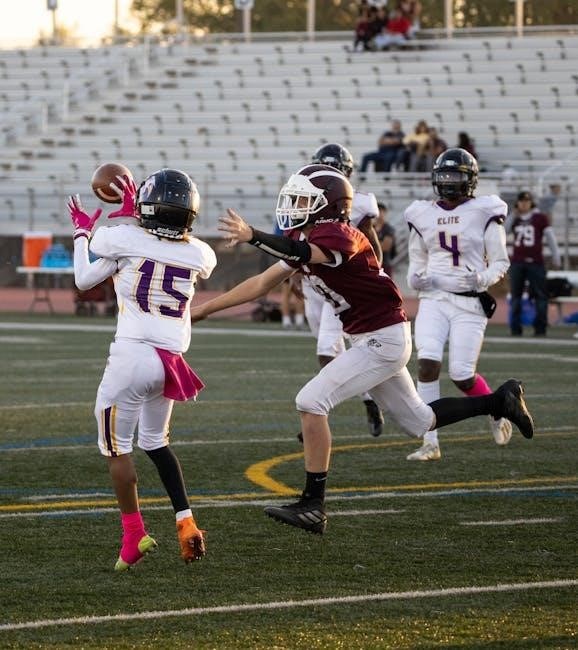
PDFs detail zone blocking drills, teaching linemen to work together on moving defenders. Finally, integrate these techniques into team drills, simulating game-like scenarios. Coaches use these drills to build a solid foundation. Consistent repetition is key, ensuring proper technique and timing.
Option Footwork Drills
Wishbone offense playbooks (PDFs) prioritize precise footwork for the triple option. Drills begin with quarterback mirroring, practicing the mesh point footwork with the fullback. Next, quarterbacks work on read steps, simulating defender reactions. Fullbacks focus on quick, decisive steps, selling the dive fake.
Halfbacks practice their outside zone steps, maintaining speed and balance. PDFs often include cone drills to improve agility and foot speed. Coaches emphasize proper technique and repetition. These drills build muscle memory, enabling quick, accurate reads and efficient option execution.
Youth Football Adaptations of the Wishbone
Wishbone offense playbooks (PDFs) for youth football simplify the scheme. Focus shifts to teaching fundamental blocking – down, reach, and double teams – crucial for player development. Option routes are streamlined, emphasizing quick reads and simple assignments. Passing is limited to play-action, minimizing complexity.
PDFs highlight drills for proper technique, prioritizing safety and skill-building. Personnel groupings are often reduced, utilizing versatile players. The goal is to instill core football principles within a manageable framework. Adaptations ensure young athletes grasp the concepts, fostering a solid foundation for future play.
Creating Your Own Wishbone Playbook
Utilizing a wishbone offense playbook (PDF) as a template is an excellent starting point. Begin by sketching formations – standard, slot, and trips – on blank pages. Detail blocking assignments for each play, noting down and reach blocks. Diagram option routes, clearly illustrating quarterback reads and backfield actions.
PDF resources offer pre-populated formations for customization. Include play-action passes and screen options to add versatility. Consider personnel groupings and adjust plays accordingly. A well-structured playbook should be clear, concise, and tailored to your team’s strengths, ensuring effective execution.
Communication and Signals
A comprehensive wishbone offense playbook (PDF) must detail clear communication protocols. Establish a concise signal system for play calls, utilizing hand signals or wristbands. Ensure quarterbacks and key backs understand adjustments based on defensive alignment. Implement pre-snap reads and audible options, clearly defined within the playbook.
Effective communication minimizes confusion and maximizes execution speed. Designate specific signals for blocking schemes – down, reach, or double teams. Practice signals relentlessly during drills, fostering seamless coordination. A well-defined system, documented in the playbook, is crucial for a successful wishbone attack.

Common Defensive Adjustments and Counters
A robust wishbone offense playbook (PDF) anticipates defensive responses. Expect defenses to stack the box, attempting to shut down the run. Counter with play-action passes, exploiting vacated spaces. Prepare for defensive line slants and stunts, adjusting blocking assignments accordingly.
Address common adjustments like corner blitzes with quick screens or option routes. Include counters for overloads and under fronts, utilizing misdirection. Detail adjustments for different personnel groupings. A comprehensive playbook provides solutions, enabling quick adaptation and maintaining offensive momentum against varied defensive schemes.
Resources for Further Study (PDFs & Books)
Enhance your understanding with dedicated resources. Explore online PDFs detailing wishbone blocking schemes and option execution. Consider “Wishbone Offensive Coaching Book” for triple-option installation. Amazon offers “Create A Playbook The Wishbone Offense,” enabling custom playbook design from blank formations.
Carl Dennis’ materials provide rules and explanations for formations and motion. Supplement these with classic football coaching books focusing on option football. Utilize online forums and coaching communities for shared playbooks and insights. A well-rounded study approach, combining PDFs and books, maximizes your strategic knowledge.
Wishbone Offense vs. Modern Defenses
Adapting the wishbone against contemporary defenses requires strategic adjustments. While its core principles remain effective, defenses have evolved to counter option attacks. Utilizing playbook PDFs helps analyze defensive tendencies and develop counters. Incorporating passing elements, as outlined in playbooks, becomes crucial to exploit defensive vulnerabilities.
Modern defenses often prioritize speed and gap control. Success hinges on precise blocking and quarterback decision-making. Playbooks detailing formation adjustments—like slot or trips—offer flexibility. Understanding how defenses react to the wishbone, through study and film analysis, is paramount for sustained offensive success.